Solar power in Curaçao: the numbers for a home
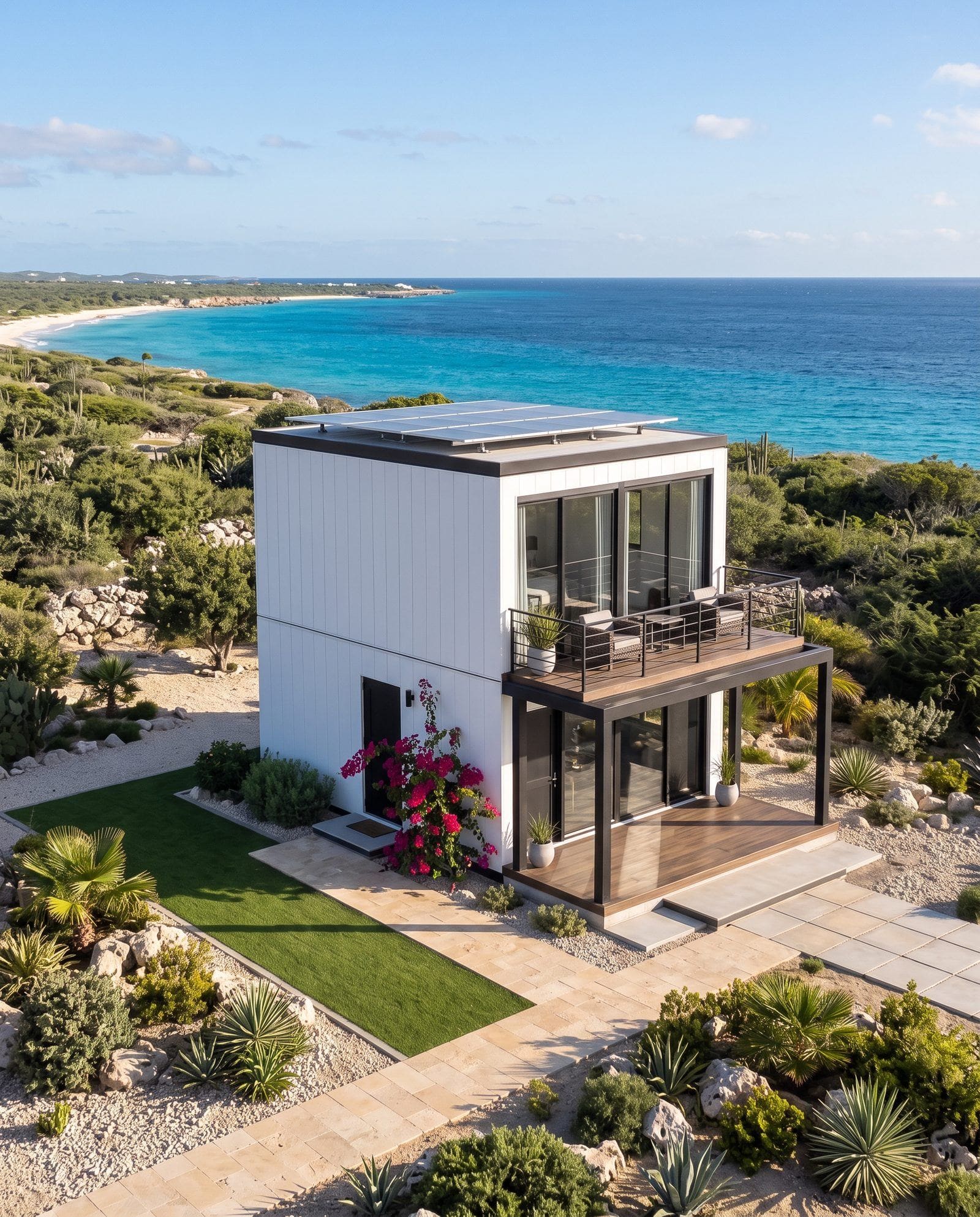
When I bought my house in Curaçao, the first thing I added was solar. The sun here is relentless, power is expensive, and the grid has had a rough couple of years. Here is how the numbers work.
What electricity costs
Aqualectra, the island's utility, charges homes in steps. At the time of writing its published domestic rate, base tariff plus fuel charge, was:
| Monthly use | Price per kWh |
|---|---|
| Up to 250 kWh | about XCG 0.55 |
| 250 to 350 kWh | about XCG 0.65 |
| Over 350 kWh | about XCG 0.70 |
The guilder (XCG) is fixed at 1.79 to the US dollar, so that's roughly US$0.31 to US$0.39 a kWh. A house running air conditioning lands in the top band quickly.
The fuel part moves every month. Prices came down about 11% across 2025, to an average of around XCG 0.58, then electricity went up again in mid-2026. Don't plan on any one month's price.
What you get for power you send back
Solar you don't use flows back to the grid. For 2026 the government kept the household feed-in terms unchanged:
- Aqualectra pays XCG 0.25 per kWh you send back.
- You pay a fixed XCG 8.00 per kWp of installed panels per month.
So a kWh you use yourself saves you up to XCG 0.70. A kWh you export earns XCG 0.25. Using your own solar is worth almost three times as much as selling it.
What that means for a house
A study of Curaçao installations found panels here produce about 1,500 kWh per installed kWp a year, with payback in seven to nine years. Prices have changed since, so treat that as a rough guide, not a quote.
Take a 5 kWp system as an example:
- It produces roughly 7,500 kWh a year, around 625 a month.
- The fixed charge is 5 × XCG 8 = XCG 40 a month.
- If you use most of that power in the house, during the day, you're avoiding the most expensive top-band kWh.
The practical lessons:
- Run the heavy loads in daylight. Pool pump, washing machine, pre-cooling the house with the AC in the afternoon.
- Size the system to what you use, not to the whole roof. Exporting a lot at XCG 0.25 stretches the payback.
- Consider a battery. It moves your daytime solar into the evening, when the AC is on and you're home. It also keeps the lights on in an outage. The island had a near island-wide blackout in 2025 and another major outage in April 2026.
Salt and wind
On the north-east coast the trade wind carries salt. Ask installers about corrosion-rated mounting, stainless fixings and inverters rated for coastal air, and rinse the panels every few months. Dust and salt build-up cost you output.
The grid is getting greener too
Around 40% of Curaçao's electricity came from wind and solar in the first five months of 2026. The national target is at least 50% by 2035, and Aqualectra has said it expects to pass 70% by 2027. That may bring prices down over time. Your own panels don't depend on it.
Sources: Aqualectra rates; Curaçao Chronicle: feed-in tariffs unchanged for 2026; Curaçao Chronicle: electricity prices fell in 2025; Curaçao Chronicle: electricity tariffs increase, July 2026; Curaçao Chronicle: nearly 40% renewable; Curaçao Chronicle: Aqualectra expects 70% renewable by 2027; Curaçao Chronicle op-ed on outages; CleanTechnica: Curaçao solar payback study.
Every Seven & Sea home comes with solar
Five new homes in Koraal Tabak, each with solar and a rainwater tank as standard.
About Seven & Sea